Beyond Selling Bread: Creating Opportunities for Work

WISH JAPON — Building a Small Future in Kyoto | Part 2
We want to create a place where young people with disabilities can work with confidence and continue working for years to come.
With this goal in mind, we have been visiting employment initiatives around the world. This time, we would like to introduce 60 Plus Bakery & Chocolate Café in Bangkok, Thailand, which we visited in September 2026.
Cafés have become one way of creating employment opportunities for people with disabilities in many parts of the world. But what kinds of jobs can be created within a café, and where might those experiences lead?
Many Different Jobs Within One Café
The bakery café we visited is connected to the work of the Asia-Pacific Development Center on Disability (APCD).
Inside, we saw signs for Thai Yamazaki bread, along with displays of chocolate products.
https://www.apcdfoundation.org/en/60-plus-bakery-chocolate-cafe
[Photo 1: Inside the café, where Thai Yamazaki bread is displayed. We want the appeal of the products themselves to matter, too.]
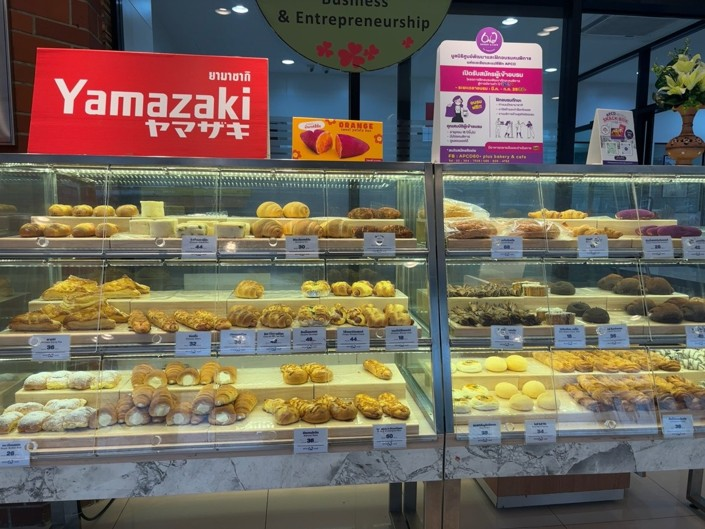
There were about four staff members in the café during our visit, with three of them appearing to move between different tasks.
Some arranged bread on the shelves, others packed purchases into bags, prepared drinks, or handled payments. One staff member communicated using sign language while working at the checkout.
The black and white uniforms seemed to indicate different roles, although we were unable to confirm the exact responsibilities or employment arrangements.
What we saw, however, was not a special event or a demonstration. It was the ordinary daily work of a café, welcoming customers who had come to buy bread.
Even within a single small shop, there are many different roles. Some people may be comfortable serving customers, while others may be better at arranging products or preparing items according to established procedures.
Rather than expecting everyone to fit into a single type of job, we can think about how work might be divided into different roles.
This is an approach we hope to bring to the café we are preparing in Kyoto.
Good Bread and the Power of Business Partnerships
One aspect of this initiative that particularly impressed us was its connection with private companies.
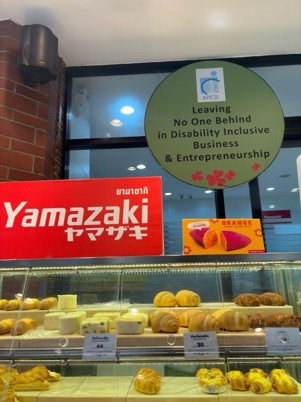
[Photo 2: A display near the bread shelves introduces APCD's vision of disability-inclusive business.]
According to publicly available information, Thai Yamazaki has provided technical support for bread production, while partnerships with businesses have also played a role in chocolate making.
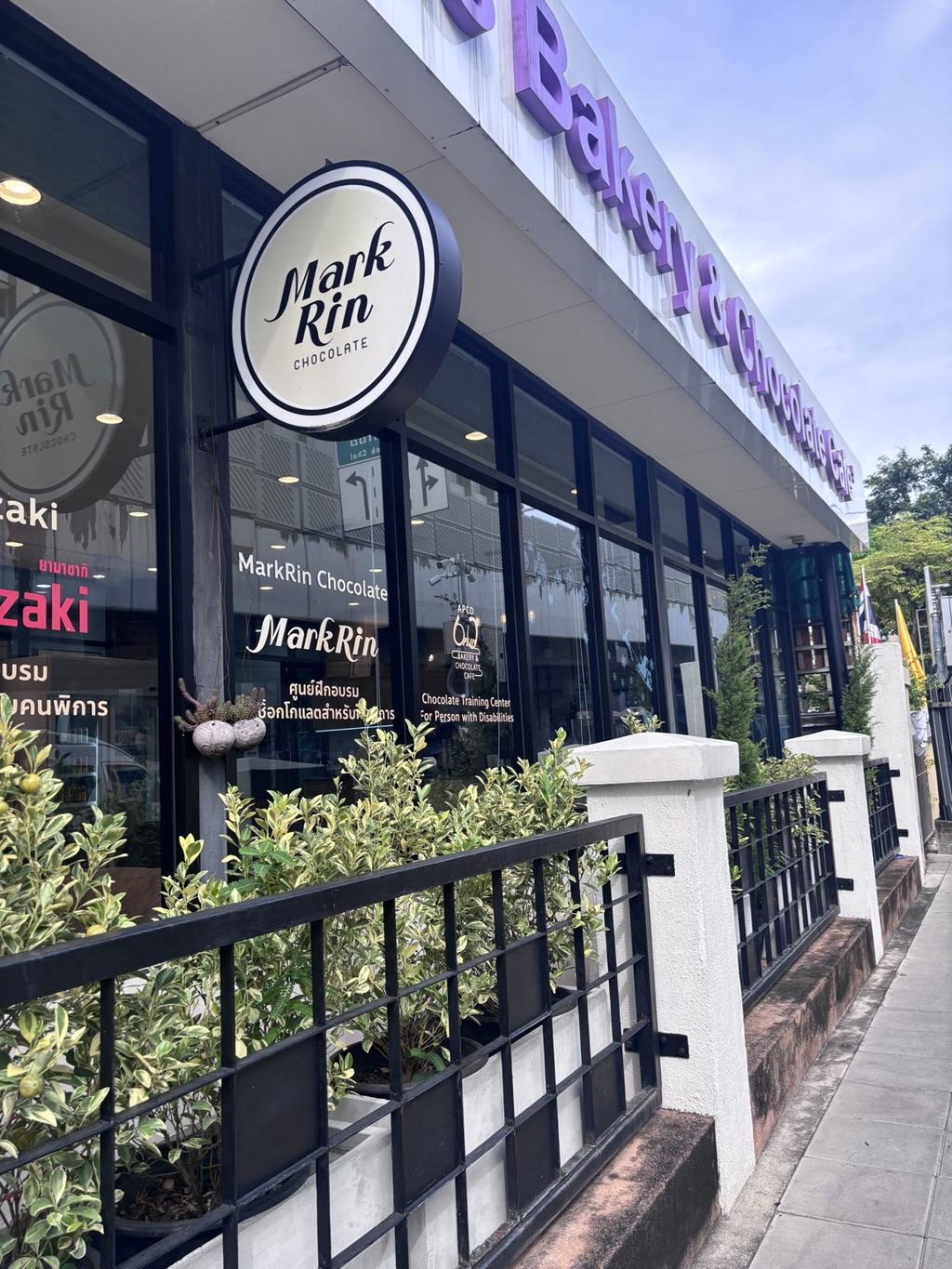
At the café, we also came across cocoa products from MARK RIN Chocolate.
https://www.markrinchocolate.com/
MARK RIN Chocolate is a chocolate manufacturer based in Chiang Mai, northern Thailand. The company works with Thai-grown cacao, from developing cacao varieties to producing chocolate, with a strong emphasis on quality.
Through its collaboration with MARK RIN, 60 Plus provides opportunities for people with disabilities to learn chocolate-making skills.
Chocolates produced by 60 Plus in collaboration with MARK RIN were reportedly served at the 2019 ASEAN Summit.
We hope to create a place where customers choose our products not simply because they support employment for people with disabilities, but because the products themselves are appealing and of good quality.
We bought some cocoa powder to take home, and it was absolutely delicious!
APCD also shares examples of people who have completed training and gone on to work in cafés, hotels, and other businesses.
What interested us was the effort to create employment opportunities beyond the café itself.
More Than Bread
The café also sold fabric accessories and woven bags. Some products carried labels from another vocational training center.
[Photo 3: Woven bags and fabric accessories were among the non-food products available at the café. ]
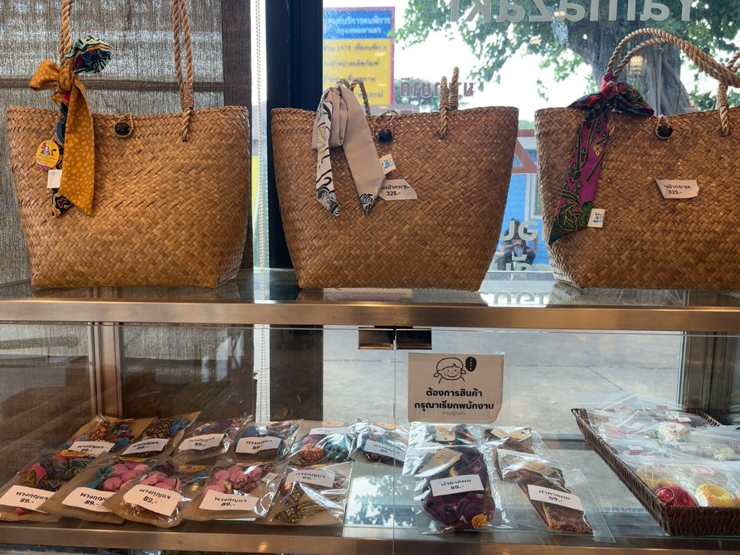
Baking and selling bread are not the only ways to create work.
There are people who make products, people who arrange them for display, and people who deliver them. Introducing customers to products made elsewhere in the community is another valuable role.
I bought one of the woven bags myself. I think it will come in handy during Kyoto's hot summer months!
At WISH JAPON, we also hope to develop a variety of roles, not only serving customers in the café, but cleaning and preparing guest accommodation, making products, and working with people and businesses in the local community.
We want to explore these possibilities one by one, always keeping in mind whether the work can be continued comfortably over time.
Creating Work That Can Last
Our visit was brief, and we were unable to learn about wages, employment arrangements, or how long people typically remain in their jobs.
In fact, these are some of the aspects of day-to-day operations that interest us most.
Creating an opportunity to work is one thing. Making it possible for that work to continue is another.
We want people to gain experience, discover their strengths, and gradually expand what they are able to do.
Each of the tasks we observed at 60 Plus offered a small but valuable clue as we think about how to build such a workplace.
In the next article, we will introduce STEPS / Theera, another initiative in Bangkok that takes a somewhat different approach to combining an appealing café experience with a supportive working environment.
WISH JAPON